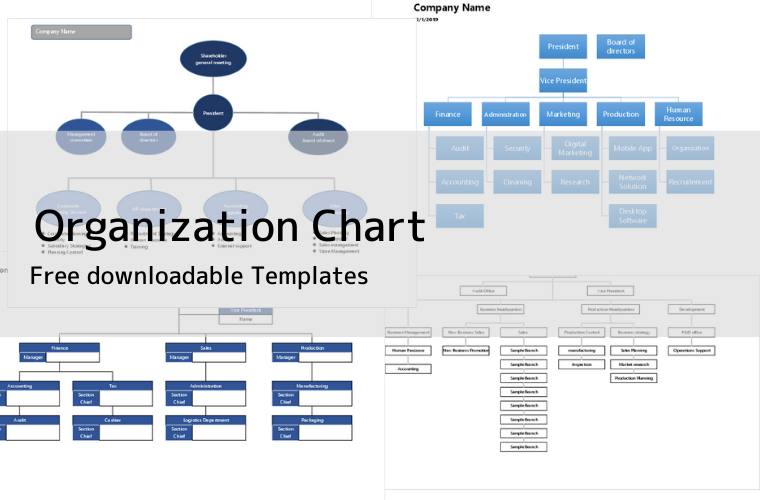
Need a simple organization chart template for Excel? These free templates can help you show your company structure, departments, teams, and reporting lines in an easy-to-read format.
An organization chart is useful when introducing your company to clients, explaining internal roles, or sharing a project team structure. It does not have to be complicated. In many cases, a clean chart with department names, job titles, and contact persons is enough.
When working with Japanese companies, one small point is worth noting: job titles and departments are often checked carefully. For example, “Sales Department,” “General Affairs Department,” and “Manager” may matter more than you expect, especially when documents are reviewed by several people. If the department name or title is vague, people may need to ask again later.
You can download 7 free organization chart Excel templates below. Some are simple and easy to edit, while others use SmartArt or shapes for a more visual layout.
- Click a sample image to view a larger preview.
- Click the “Download” button below each template image.
- The file can be downloaded from the download page.
- All templates are available in Excel format only.
Free Organization Chart Templates for Excel
These templates can be used for company organization charts, department charts, team structures, and project member lists. Choose a layout that matches the size of your organization. Personally, I find the simple ruled-line versions easier to adjust when names or positions change often.


Tips for Creating an Organization Chart
When creating an organization chart, try not to put too much information into one box. Department name, job title, and name are usually enough. If you add phone numbers, emails, notes, and responsibilities, the chart quickly becomes hard to read.
A common mistake is mixing departments, project roles, and personal names without a clear rule. For example, one box says “Sales Department,” another says “Mr. Smith,” and another says “Project Leader.” It may still make sense to the person who created it, but not to someone seeing it for the first time.
For Japanese-style business documents, keeping the layout neat is more important than making it decorative. A simple chart that can be printed and filed cleanly is often easier to use in meetings, internal approvals, and client explanations.