Need a simple office seating chart, but do not want to start from a blank Excel file? These free Excel templates are useful for small office moves, new departments, desk changes, and basic seating plans.
You can edit names, move desks, add departments, print the chart, or share it with your team before the actual move. Excel is not a full floor plan tool, of course, but for everyday office seating management, it is often enough.
One small thing to keep in mind when working with Japanese companies: office layouts are often checked by several people, not just one manager. A clean seating chart makes it easier for the general affairs team, department managers, and sometimes executives to review the arrangement without extra back-and-forth.
Free Office Seating Chart Templates for Excel
You can download three types of office seating chart templates below. Each template is made in Excel, but the layout style is slightly different.
Click the thumbnail image to see a larger preview. Use the “Download page” button below each image to go to the download page.
Which Type of Seating Chart Should You Use?
- Good for a clean and flexible office layout.
- Useful when desks, meeting tables, cabinets, or printers do not fit neatly into Excel cells.
- You can create a more visual layout, but adjusting many objects one by one can take time.
Layout created with borders
- Easy to edit, even if you are not used to Excel drawing tools.
- Good for simple desk arrangements and department seating charts.
- Moving seats is usually faster because the layout follows the Excel grid.
- Not ideal for irregular office shapes or diagonal desk layouts.
Personally, for a quick internal seating chart, the border-based type is easier to handle. Shapes look nicer, but when someone says, “Can you move these two seats?” five minutes before printing, borders are less stressful.
A common mistake is trying to make the first version too perfect. It is better to create a rough layout first, confirm the desk positions, and then adjust names, teams, and shared spaces such as printers or cabinets.
Office Seating Chart Templates
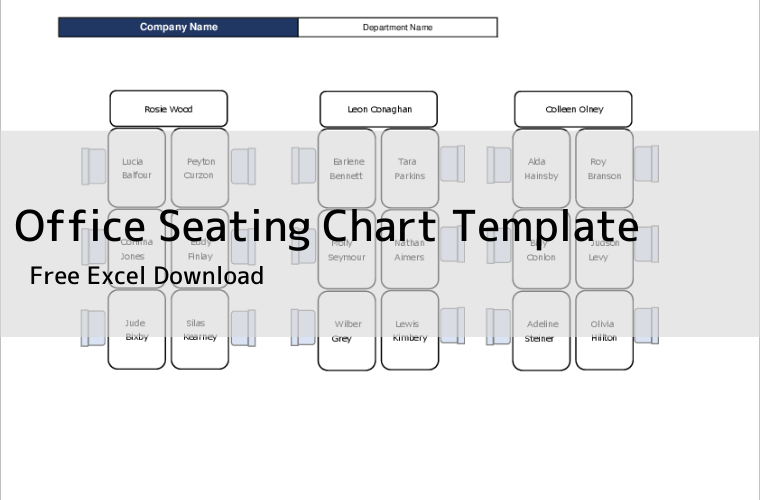
Office Seating Chart Template 01 - Using AutoShapes
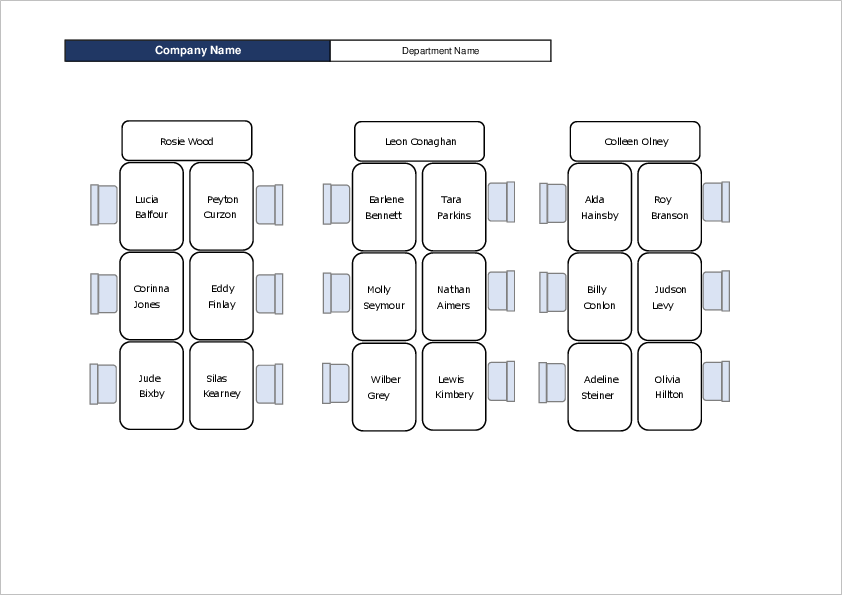
Office Seating Chart Template 02 - Using Borders
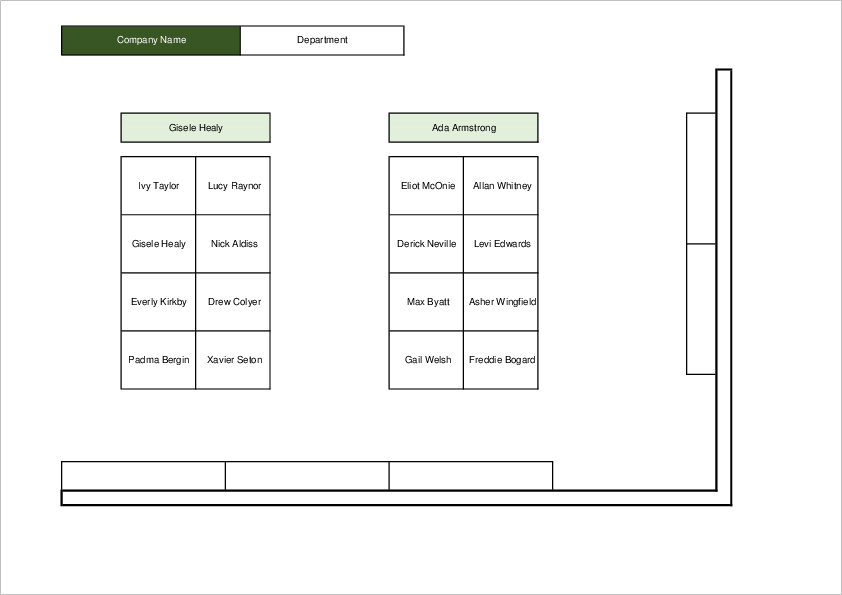
Office Seating Chart Template 03 - Compact Layout Using Borders
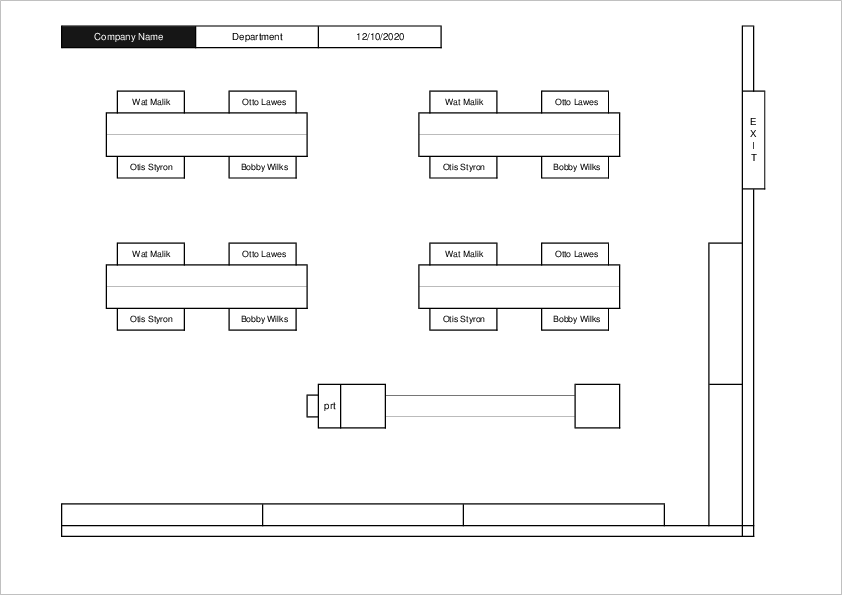
How to Use These Excel Seating Chart Templates
First, download the template that is closest to your office layout. Then open it in Excel and replace the sample names with your own employee names, team names, or seat numbers.
For an office move or layout change, it is usually easier to print the chart once and mark changes by hand before editing the final Excel file. This sounds old-fashioned, but it helps. People often notice small issues only after looking at the printed layout, such as a manager being too far from the team, a printer being in the wrong place, or a visitor seat facing the wrong direction.
If the chart will be used in Japan or shared with a Japanese office, try to keep the layout neat and easy to file. A simple title, clear names, department labels, and a printable A4-style layout are usually appreciated. Some companies also prefer to show seat numbers clearly because the document may be checked by the general affairs department before the move.
When Excel Is Enough, and When It Is Not
Excel is useful for simple seating charts, small office layouts, and department-level seat management. It is also convenient when you need to make small changes quickly.
However, if you need an accurate floor plan with exact measurements, electrical wiring, emergency exits, or construction details, Excel is not enough. In that case, it is better to use dedicated layout software or ask a professional contractor.
For everyday office seating management, though, an Excel template is often the fastest place to start.